
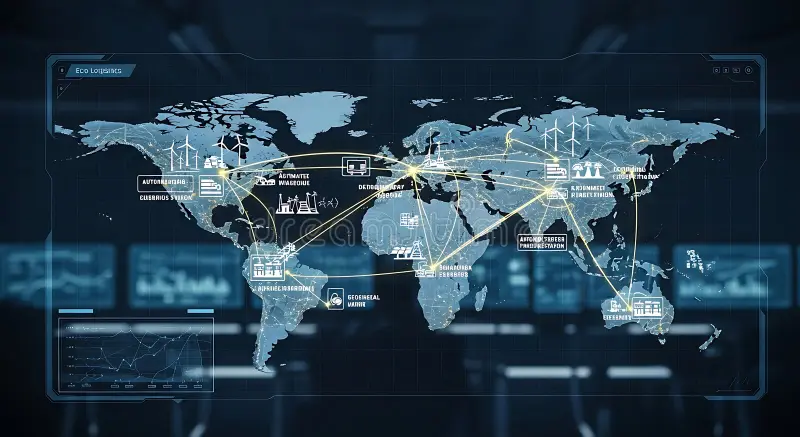
The AI Revolution in Logistics Is No Longer Coming — It’s Already Here
Imagine a warehouse where autonomous robots move with precision, restocking shelves in real time, or a delivery route that dynamically adjusts to traffic and weather to ensure packages arrive ahead of schedule. These are not futuristic concepts. They are the current reality — powered by artificial intelligence and modern technology strategies.
As someone who has spent the last decade leading large-scale technology transformation as an SVP of Technology and Head of Data Engineering & Advanced Data Sciences, I’ve had a front-row seat to how AI is fundamentally reshaping the logistics and supply chain industry.
At its core, AI simulates human intelligence in machines — enabling them to learn, adapt, and make complex decisions. In logistics, this means combining machine learning, computer vision, robotics, predictive analytics, and real-time data orchestration to solve problems that once seemed unsolvable.
The results are already dramatic. Companies that have embraced enterprise technology strategy and AI leadership are seeing significant gains in operational efficiency, cost reduction, on-time delivery performance, and customer experience. From intelligent demand forecasting and automated inventory management to dynamic route optimization and predictive maintenance on fleets, AI is eliminating longstanding inefficiencies across the entire supply chain.
For CIOs, CTOs, and SVPs of Technology, the message is clear: the winners in this new era will be those who treat AI not as a bolt-on project, but as a core part of their technology vision and operating model. Organizations that successfully integrate AI into their logistics operations are moving faster, reducing waste, and building more resilient supply chains than their competitors.
The logistics industry is in the midst of one of the most significant technology transformations in decades — and the pace is only accelerating.
What are you seeing in your own operations? Are you actively leveraging AI to drive your supply chain strategy, or still in the early stages?
I’d love to hear your perspective in the comments.