
Why AI and ML Are Critical to the Future of Logistics
Smart, connected logistics is no longer possible without artificial intelligence. As supply chains become more complex and margins remain tight, AI has emerged as a foundational capability for logistics organizations seeking to improve performance, reduce costs, and build resilience. When applied effectively, AI helps minimize downtime, lower fuel and maintenance expenses, and anticipate disruptions before they impact customers.
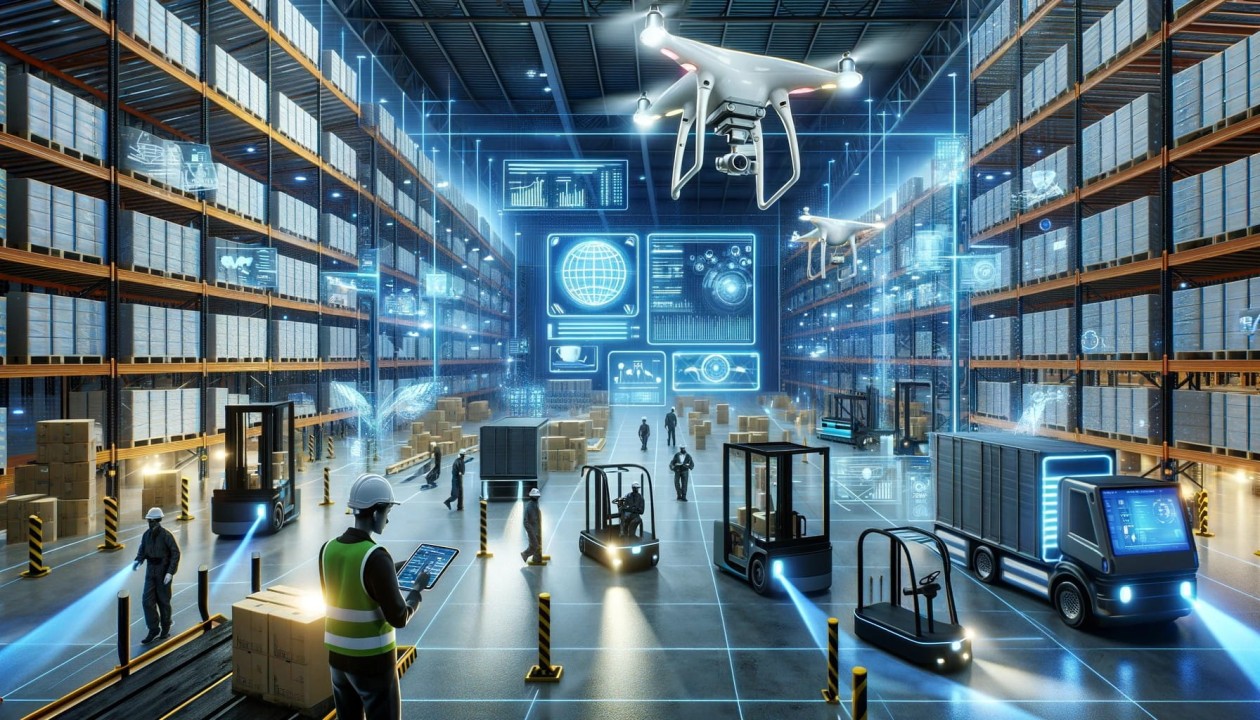
Across the industry, AI is already delivering measurable value. Predictive analytics and demand forecasting reduce overstocking and stockouts. Computer vision enables automated inspection and safety monitoring in warehouses. Natural language processing powers 24/7 customer support, automates document handling, and surfaces early risk signals. Reinforcement learning optimizes routing decisions in real time, while automation and robotics increase throughput in picking, packing, and sorting. AI-driven fleet management and predictive maintenance further reduce breakdowns and extend asset life.
Adoption is accelerating because the results are real. Nearly 67% of logistics decision-makers plan to use AI within the next five years, and two-thirds believe it will be critical to their business success. Studies show AI can reduce operating costs by up to 35% in certain logistics operations by making the warehouse workers more efficient in their tasks, with overall logistics costs falling by roughly 15%—a significant advantage in an industry defined by narrow margins.
Technology is increasingly viewed as a competitive differentiator. By 2027, AI and data science are expected to be embedded in 75% of supply chain platforms, and the AI supply chain market is projected to grow at more than 20% annually through 2028. Yet while only about 19% of companies actively use AI today, many remain stuck in planning phases. That gap creates opportunity for early adopters and risk for those who wait.
The winners will be the organizations that move beyond experimentation and focus AI investments on the problems that matter most—turning data into insight, insight into action, and logistics into a true competitive advantage.